Where the Cables Go: Planning Power and Light for Fitted Wardrobes in Bacup
Photo: Spaceslide, CC BY-SA 3.0, via Wikimedia Commons
There is a small ritual in plenty of Bacup bedrooms. Last thing at night, someone crouches behind a bedside table to free a phone charger from a socket that is half hidden by a lamp. First thing in the morning, someone else opens a wardrobe door and peers into a corner that never quite gets enough daylight, looking for a jumper in the gloom. Fitted storage can solve both of those irritations, but not through joinery alone. It happens because somebody thought about electricity before the first carcass was carried up the stairs.
That is the part of the project that gets skipped. Most conversations about fitted wardrobes in Lancashire start with doors, colours and how much hanging space you can squeeze into a back bedroom. Electrics tend to arrive late, usually the week of installation, usually as a question rather than a plan. By then the sensible options have narrowed considerably.
Why the order of work matters so much
A good fitter can build around almost anything. What they cannot do is conjure a socket inside a finished wardrobe without cutting a hole in something you have just paid to have made. The same goes for cable routes. Once the carcasses are fixed to the wall, the skirting is trimmed and the cornice is on, every wire has to travel either through the inside of the furniture or across the face of it, and neither is what you want to look at every morning.
The practical fix is straightforward. Treat the electrics as part of the design rather than a job for afterwards. That means agreeing where power is needed while the layout is still on paper, and getting a qualified electrician involved at roughly the same time as the fitter, not after them.
Three jobs, not one
It helps to separate what you actually want the electricity to do. In most fitted bedrooms it comes down to three things.
The first is light. A warm LED strip under a shelf, along the top of the rail or down the inside of a door frame makes a genuine difference in a shaded room, and it costs very little to run. The second is charging: phones, tablets, watches, the cordless drill you keep meaning to put in the shed. The third is the odd extra: a heated clothes rail for damp months, a small dehumidifier rod, maybe a fan in a stuffy box room.
Each of those has different requirements, and lumping them together as 'a bit of power in the wardrobe' is how people end up with a single socket in an awkward place and an extension lead snaking over the shoe shelf.
Lighting that earns its keep
LED strip is the workhorse here. Warm white, somewhere around 2700 to 3000K, is the usual recommendation for a bedroom — cool white reads as clinical when you are half awake at seven in the morning. Look for a decent driver rather than the cheapest reel online, and make sure the driver sits somewhere it can breathe and be reached.
Switching is worth a thought too. A door-activated switch is simple and reliable: open the door, the light comes on. A motion sensor inside the wardrobe does the same job without any mechanism to line up, which suits sliding doors and awkward corners. Either way, ask for the sensor to be positioned so it is not triggered every time someone walks past the bedroom door.
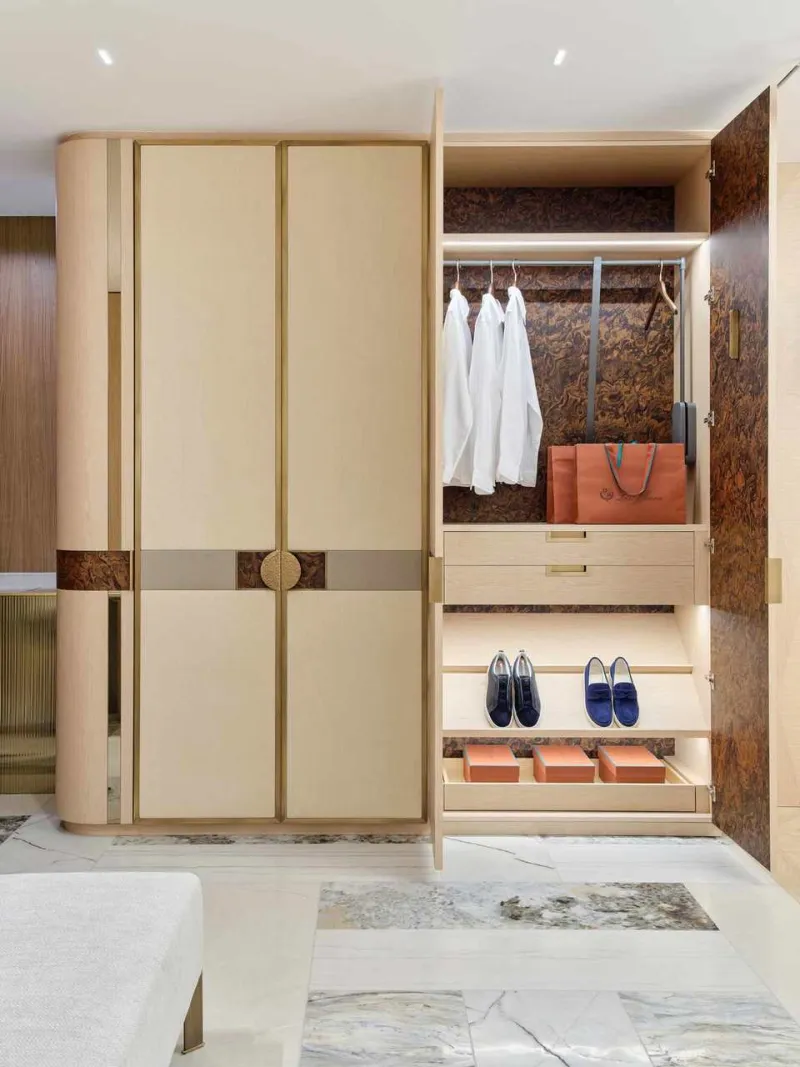
One more point that gets missed: light needs something to bounce off. Pale interiors, or a strip hidden behind a shelf lip so it washes down the back wall, will look far better than a bare LED glaring off a dark carcass.
The charging shelf
A charging drawer or shelf is one of the most popular additions on a fitted bedroom, and one of the easiest to get wrong. The good version is a shelf at roughly waist height with a double socket set into the back, a small hole or notch for cables, and enough clearance that a phone is not jammed against a door.
The version to avoid is a line of extension leads daisy-chained inside a sealed cupboard. Sockets need ventilation, plugs need to be reachable without dismantling the furniture, and anything with a transformer will run warmer than you expect in a closed box. If in doubt, leave a gap at the back and keep the socket accessible.
Cable routes and the awkward Lancashire bits
This is where older Bacup housing stock makes itself known. Solid stone walls can mean chasing is either difficult or a bad idea, and surface trunking becomes the sensible compromise if you want the job done without a fortnight of dust. Terraces with tight stair landings and chimney breasts often have the wardrobe sitting against a wall where the only route to the consumer unit runs the long way round. None of that is a disaster, but it needs pricing and agreeing rather than discovering.
Also check what the wardrobes will cover. Plenty of bedrooms have a socket or a spur exactly where a carcass is going, and it is far better to relocate it or plan an access panel than to bury a connection behind a fixed back panel.
Who does what
Generally, the fitter builds the furniture and the electrician does the wiring, and a good pair will have worked together before. Ask the electrician for a certificate for the work when it is finished, and check they are registered with a competent person scheme. Any new circuit or alteration needs to meet BS 7671, and even a small addition should be tested rather than assumed.
Sequence it sensibly. First fix — the cable runs and back boxes — should happen before the carcasses go in. Second fix, meaning the sockets, switches, lights and drivers, comes after the furniture is fitted but before the room is finished and dressed.
A short checklist before anyone lifts a panel
- Mark up where you want sockets, sensors and strips on the layout drawing, not just in your head.
- Decide whether lighting switches by door, by motion or by a wall switch.
- Ask where the LED drivers will live and how they will be ventilated.
- Check whether any existing socket will be hidden by the new furniture.
- Confirm the route from the wardrobe to the consumer unit and who is making good afterwards.
- Agree who supplies the strip, drivers and sockets, and who fits them.
- Get the certificate at the end.
None of this adds much to the planning stage. It does add a great deal to how the finished room feels in February, when the light is thin and the phone needs charging and nobody wants to be crouching behind a bedside table with a torch.