Swap Not Shove: Planning Fitted Wardrobes With Room for Every Season
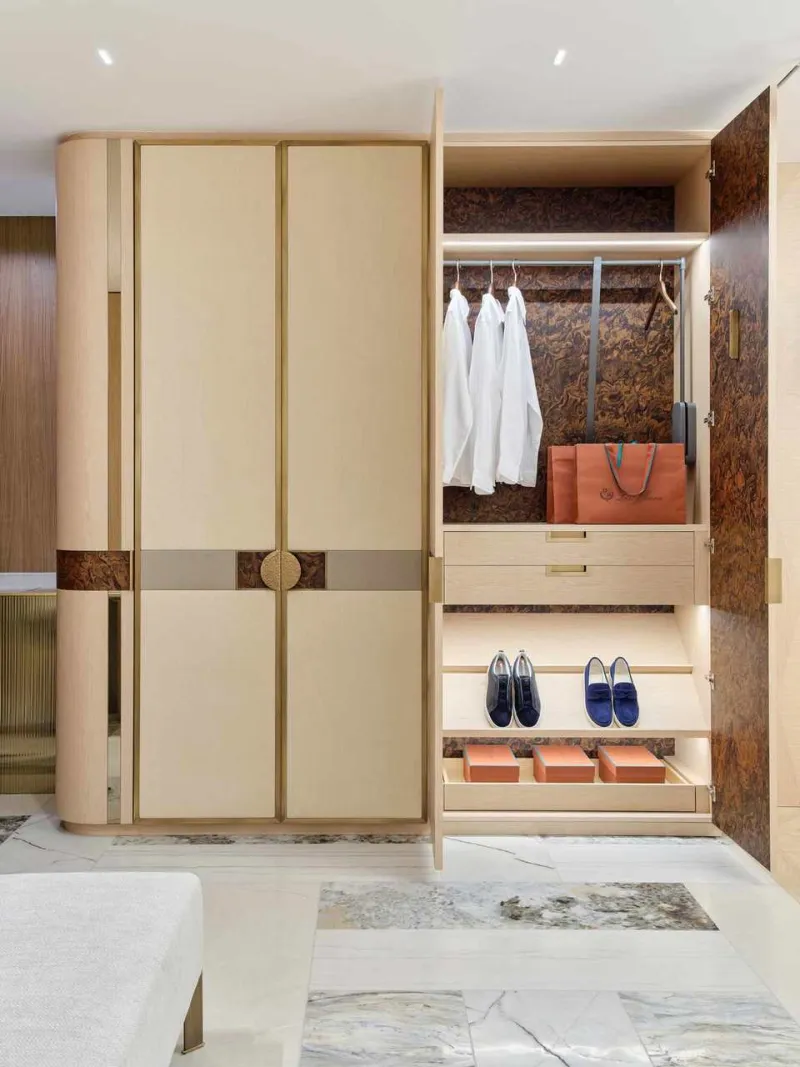
Photo: Faura Ltd, CC BY-SA 4.0, via Wikimedia Commons
There's a moment every autumn in Bacup when the weather turns and the wardrobe gives up. The padded coat that saw you through the school run comes down from the loft, the boots come out of the box under the bed, and suddenly the rail that was perfectly comfortable in July is groaning like a slack rope bridge. Everything gets shoved along to make room, and for the next five months you're fighting a wall of sleeves every time you want a clean shirt.
It doesn't have to be like that. A fitted wardrobe planned with the seasons in mind does most of the hard work for you, so the great winter swap is a job you can knock off on a Saturday morning with a brew in hand rather than a fortnight of dread.
Why seasonal zones suit Lancashire homes
Most of us in Rossendale are working with bedrooms that weren't designed around modern wardrobes. Terraces with shallow alcoves, semis where the box room is genuinely the size of a box — there simply isn't space for a summer wardrobe and a winter wardrobe sitting side by side. What there usually is, though, is unused height and unused depth. That's where seasonal zoning comes in.
The idea is straightforward. Instead of splitting your storage by garment type, you split it by season and by how often you actually reach for things. Coats, boots and heavy knits live in the places that are a faff to get to. Everyday clothes live at eye level. Out-of-season kit lives up high or down low, out of the way but not out of reach. When the weather turns, you're swapping between zones rather than trying to squeeze two seasons into one rail.
Going up: the high shelf earns its keep
The top of a fitted wardrobe is the most underused space in most Bacup bedrooms. It's also the perfect home for the stuff you only touch twice a year — the suitcase of summer dresses, the vacuum bags of lighter bedding, the beach towels that get one week of use if you're lucky.
Get the shelf height right and it becomes genuinely useful. Too high and you need a stepladder and a good mood to access it; too low and it eats the hanging space below. A good fitter will work around your ceiling height rather than forcing a standard unit into a space that can't take it. Older properties in the valley rarely have a level ceiling, so this is one area where a made-to-measure job beats anything off the shelf.
One practical note: whatever goes up there wants to be light and squashable. Heavy boxes stored overhead get forgotten, and forgotten boxes in a Lancashire winter are where damp patches and musty smells begin.
Going down: drawers, boots and the wet-weather problem
Lower drawers are where your winter kit really earns its place. Boots, chunky jumpers, thick socks, gloves, the scarf you always lose — all of that sits better in a deep drawer at knee height than on a high shelf. If you've ever pulled on a cold, slightly damp boot in January, you'll know why keeping footwear at ground level and off the floor of a cold room is a sensible move.
If you're storing boots in the wardrobe itself, think about airflow. Solid-sided boxes and sealed bags trap moisture, and Lancashire winters are nothing if not enthusiastic about moisture. Open crates, slatted drawers or breathable canvas storage let air circulate rather than sealing damp in against the leather. It's a small detail that makes a big difference over a few seasons.
Letting the wardrobe breathe
Speaking of damp — this is the bit that matters more here than in, say, Surrey. Between the Pennine weather, the older housing stock and the number of homes with solid stone walls, Bacup bedrooms can hold a surprising amount of humidity in the colder months. A wardrobe packed solid with no gaps is a wardrobe that will eventually smell of it.
A few habits help:
- Leave a gap at the back of the hanging space rather than pushing everything flush against the wall.
- Don't overfill a rail — clothes need room to hang without being crushed against each other.
- Ventilation slots or a slightly gapped door can make the difference in a room that gets steamy.
- On dry, breezy days, open the bedroom window for twenty minutes and leave the wardrobe doors ajar. It sounds trivial; it works.
If you're planning a fitted wardrobe and you know your room runs damp, mention it at the design stage. There are board choices and back-panel options that handle it better than others, and it's far easier to build in than to retrofit.
Making the swap quick rather than painful
The goal is a twice-yearly changeover that takes an hour, not a weekend. A few design choices get you there:
One rail, one shelf, one drawer, all adjustable. Adjustable shelving means you can drop a shelf a notch in October to take the knitwear stack, then raise it again in April. Fixed shelving locks you into one configuration forever, which is exactly what causes the shoving problem in the first place.
Split hanging space. A full-length section for coats and dresses, a shorter double rail for shirts and tops. In winter, the double rail section can be rejigged for folded jumpers on a shelf above. That flexibility is worth more than extra drawers.
Label the out-of-season boxes. It sounds obvious. It is obvious. It also saves you opening four boxes in April looking for the one with the sandals in.
Keep a 'maybe' bag. One breathable bag for the things you're unsure about — the coat you might still need in March, the cardigan that might come back into rotation. It stops you committing too early and then digging through the stored boxes in a cold snap.
A note on older Bacup properties
If your bedroom is in a stone-built terrace with a chimney breast, a sloped ceiling or a distinct lack of right angles, seasonal zoning is arguably even more useful. Awkward corners that can't take a full rail can take a low drawer bank or a bank of shelves for out-of-season boxes. The space that's hardest to use for everyday clothes is often the easiest place to park the winter coats for six months.
That's really the whole point. Fitted storage in a Lancashire home isn't about squeezing in more hanging space — it's about using the awkward bits deliberately, so the useful bits stay useful. Get that right and the winter swap stops being a chore. It becomes a ten-minute shuffle, a change of shelf height, and a cupboard that actually shuts afterwards.