Hanging Heights, Honestly: Sizing Wardrobe Rails for Real Bacup Clothes
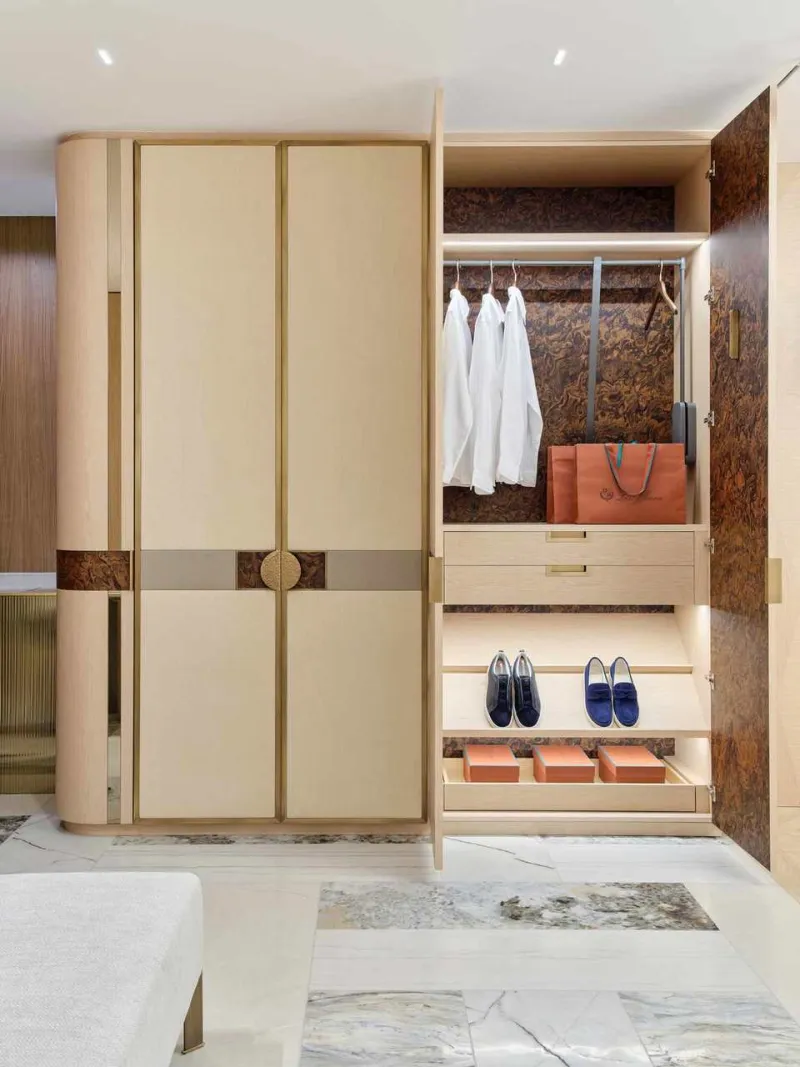
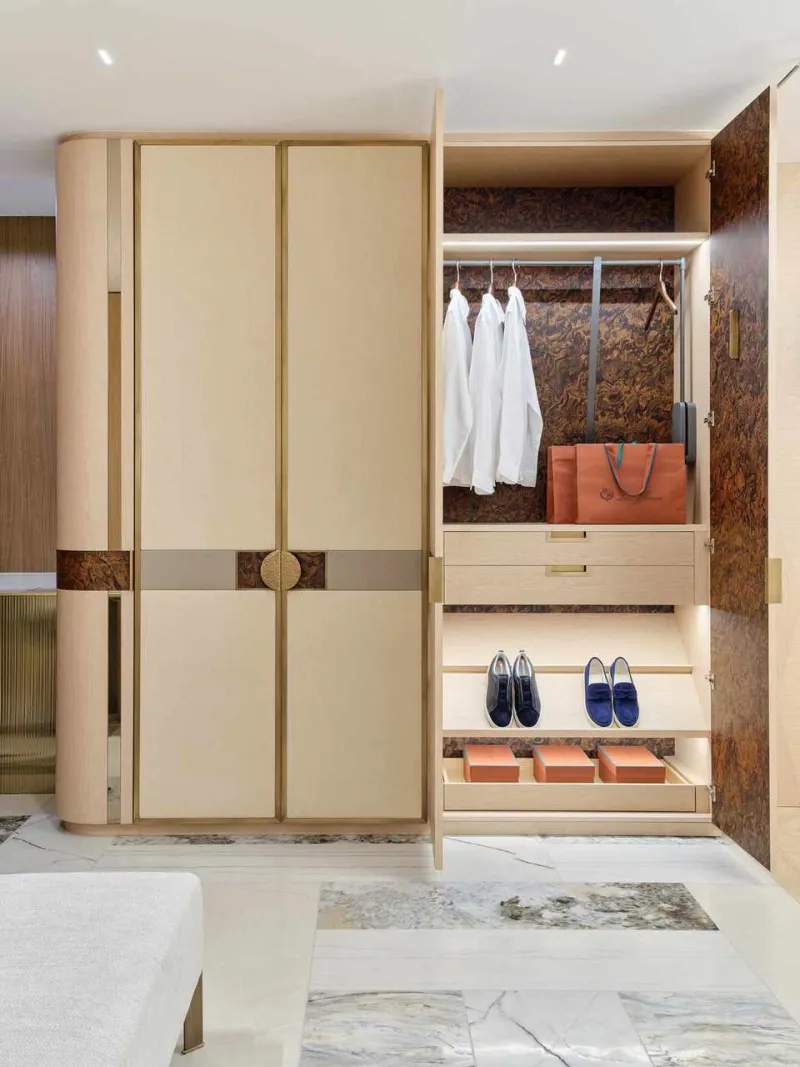
Photo: Faura Ltd, CC BY-SA 4.0, via Wikimedia Commons
Somewhere between the first sketch and the final quote, almost every fitted wardrobe plan acquires a rail at 1.8 metres. It's the number everyone knows. It's also a number that suits thin shirts, short jackets and nobody's winter coat.
If you live in Bacup, where a coat is less an accessory than a piece of survival equipment, that matters. So before the fitter drills anything, it's worth doing twenty minutes of measuring with a tape and a handful of your own hangers.
Start with the hanger, not the garment
The mistake is to measure from the shoulder. Hangers add height. A thin wire hanger adds about 6cm above the shoulder line; a chunky wooden one can add 8cm or more, especially with a shaped profile. Add 2cm so the garment isn't jammed against the shelf or rail above, and you have roughly 10cm of invisible space that has to exist above every coat.
Which means the 1.8m rail in the plan has around 1.7m of usable hanging height underneath it — before you take anything off for floor clearance.
The clearance below
Garments shouldn't rest on the wardrobe floor. A hem-to-floor gap of 3–5cm keeps things off dust and stops long coats creasing where they touch the base. So the sum is simple:
Rail height = garment length + 10cm (hanger and breathing room) + 4cm (floor clearance)
For a 140cm wool coat, that's a rail at 154cm. Comfortable — but it leaves no room for a shelf above at 180cm without crowding.
A working ledger of garment lengths
These are shoulder-to-hem figures for clothing on a hanger, which is what you actually need. They're typical rather than universal, so use them as a starting point and check your own.
| Garment | Hang length |
|---|---|
| Children's tops, age 3–4 | 35–45cm |
| Children's dresses, age 5–7 | 50–70cm |
| Shirts and blouses | 75–85cm |
| Folded knitwear on a hanger bar | 50–65cm |
| Skirts | 55–85cm |
| Jackets and blazers | 95–105cm |
| Trousers, clipped or folded | 90–105cm |
| Everyday dresses | 95–125cm |
| Dressing gown | 115–135cm |
| Wool coats | 110–135cm |
| Long winter coats | 130–145cm |
| Maxi dresses | 140–155cm |
The single most useful thing you can do is take the five longest items in the house, hang them on the hangers they actually live on, and measure from the top of the hook to the lowest hem. That figure, plus 14cm, is your rail height. Everything else can be planned around it.
Double rails: brilliant, and frequently mis-sold
A double rail — one at around 195cm, one at around 105cm — roughly doubles hanging capacity in the same footprint. It only works, though, if everything on those rails is short. Shirts, blouses, folded trousers, jackets and children's clothes: yes. Coats, dresses and anything with a hem below the knee: no.
For most Bacup bedrooms the sensible arrangement is a mixed run. Give one bay of 55–60cm over to full-height hanging for coats, dresses and the ironing-day backlog, and double-rail the rest. If two people share the wardrobe and one of them owns four coats, the full-height bay is not negotiable, whatever the plan says.
The children's clothes problem
Children's garments roughly double in length between the ages of four and ten, which means a rail set for a seven-year-old will be in the wrong place within three years. Two fixes: plan the children's bay with two pre-drilled rail positions so it can drop as they grow, or fit an adjustable system on a 32mm pitch so the rail can be moved without a second visit. Both cost very little at the planning stage and nothing at all later.
Doors, drawers and the swing
Two clearance figures worth writing down. Hinged doors need 5–8cm of clear space between the front of the garments and the inside of the door, otherwise coat sleeves get pinched every time it closes. Sliding doors need the full internal depth clear, because there's no swing to work around but also no give.
And if there's a bank of drawers under the rail, remember the lowest hanging point has to clear the drawer stack — usually 90–100cm for a three-drawer unit.
Wet coats and Lancashire air
Bacup's weather means coats come home damp more often than not. A rail packed solid is a rail with no airflow. Leaving 8–10cm between the longest coats, and not pushing them flat against a side panel, does a lot to stop the musty smell that appears in February. If the wardrobe sits against a cold external wall, a ventilated back panel or a small air gap behind the unit is worth asking about at quote stage.
The two-minute check before you sign
Hang your five longest garments. Measure hook to hem. Add 14cm. Write the number down. Then check the wardrobe plan has a rail at that height, in a bay at least 55cm wide, with the door clearance to match. If it doesn't, the plan isn't wrong — it's just been drawn for the average household, and no household has ever been average.