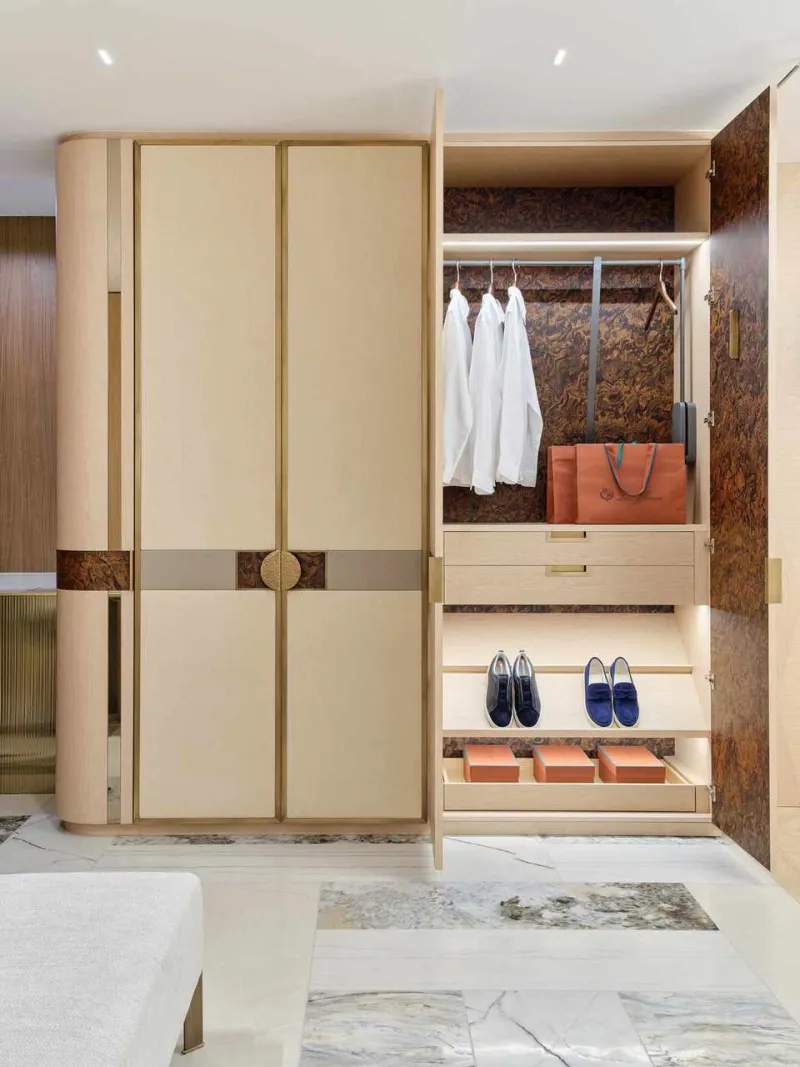
Bulky, Awkward, Essential: Carving Out a Utility Bay in Bacup Bedroom Wardrobes
Photo: Ministry of Information Photo Division Photographer, Public domain, via Wikimedia Commons
Every Bacup bedroom has one: the object that does not belong there but has nowhere else to go. Sometimes it is an ironing board leaning against the chimney breast. Sometimes it is a drying rack that lives permanently in the corner, or a suitcase that has been on top of the wardrobe since the last trip to the coast. The vacuum cleaner is the classic culprit, parked by the bedroom door because the cupboard under the stairs is already full.
A fitted wardrobe run can take these awkward items seriously. Not by shoving them into the hanging space and hoping for the best, but by planning a dedicated utility bay from the start. It is a small piece of design thinking that makes a large difference to how a room feels day to day.
Start with an honest inventory
Before anyone measures a wall, measure the things that will go in the bay. An ironing board folded down is usually around 35cm wide and 10–12cm deep, but the height when stood on its end varies. A drying rack might fold to 100cm long and 55cm wide. A cylinder vacuum needs floor space plus clearance for the hose and handle. A suitcase is often the widest item of all.
Write down four figures for each object: height, width, depth and weight. Add a note about how it is carried and whether it needs to be pulled out regularly. An ironing board used twice a week needs easier access than a suitcase used twice a year. Photograph each item next to a tape measure – it saves guesswork later and gives an installer something concrete to work from.
Where the bay should sit in the run
The end of a wardrobe run is usually the best spot for a utility bay. It keeps the hanging space continuous and gives the bulky items their own column. Avoid placing the bay directly behind a bedroom door, where a pulled-out ironing board will collide with the door swing. If the room is a narrow terrace bedroom, consider a shallow bay at the hinge end rather than a deep one in the middle.
Depth matters more than width here. A standard wardrobe projects around 60cm, but a vacuum cleaner may only need 35–40cm. That leaves room for a shelf above and a ventilated back panel behind. If the bay is too deep, items disappear into the dark and get forgotten. If it is too shallow, the vacuum door will not close. Measure the deepest item and add a couple of centimetres for manoeuvre.
Ventilation is not optional in Lancashire
Bacup's stone-built homes and damp climate are not kind to stored fabrics and electricals. A utility bay needs air to move. Ask for a ventilated back panel or slatted shelves rather than a sealed cupboard. A drying rack put away damp will make the whole wardrobe smell of wet washing, and a vacuum cleaner stored against a cold exterior wall can attract condensation.
Breathable board materials help, but gaps and airflow do more. Leave a small clearance behind the bay and avoid packing it tight. If the bay sits against a chimney breast or an old solid wall, consider a thin moisture-resistant lining. The aim is not a sealed box – it is a cupboard that can dry out.
Sockets, light and the things you plug in
A utility bay is often the natural home for a vacuum charger, a steamer or an iron. Plan the socket before the quote, not after the boards are cut. An internal socket on the side wall of the bay is ideal, but it must be accessible without pulling everything out. If the bay is deep, a socket near the front edge is more useful than one at the back.
Light matters too. A small LED strip inside the bay makes it easier to see what is there and reduces the chance of leaving a charger switched on. Keep cables away from the door mechanism and from any shelving that slides. If the socket is shared with a bedside lamp circuit, check the load with an electrician – this is not the place for guesswork.
Doors, drawers and pulling things out
Hinged doors need swing room. Sliding doors need a clear track. For a utility bay, a single hinged door that opens flat against the adjacent wardrobe is often the simplest solution. If the bay holds a drying rack that needs to be lifted out, make sure the door opening is wide enough for the rack's full width, not just its folded depth.
Adjustable shelving earns its keep here. A shelf at 90cm for the ironing board, another at 150cm for the suitcase, and a clear floor space for the vacuum is a starting point. Pegs and hooks on the inside of the door can hold the ironing board cover, a lint roller or a spare charger. Just check that anything hanging on the door does not stop it closing.
A measuring checklist for the quote
When you ask for a fitted wardrobe quote in Bacup, give the installer these details alongside the room measurements:
- The height, width, depth and weight of every awkward object.
- Which items need to be pulled out weekly and which are seasonal.
- The position of existing sockets and whether you need a new one inside the bay.
- The door swing of the bedroom door and any adjacent furniture.
- Ceiling height, skirting depth and whether the floor is level.
- Whether the wall is solid stone, plasterboard or a chimney breast.
- Your preference for ventilated backs, slatted shelves or adjustable runners.
A good installer will ask most of this anyway. Arriving with the answers saves a second visit and reduces the chance of a bay that fits the wardrobe but not the vacuum.
The small bay that makes the room work
A utility bay is not the glamorous end of fitted storage. It is the practical end, and in a Bacup bedroom it is often the difference between a room that feels calm and one that feels like a storage overflow. Plan it around the objects you actually own, give it air and light, and measure before you commit. The ironing board will thank you.